
REJECT
Blocking outside the allowed path
A request that is not on an allowed execution path is a REJECT. Policy cannot soften this.
core · decision
Overview
No verified execution path, no signature.

Requests that cannot be verified never reach the signer, and every decision is kept in a hash-chained record.
Attacks that never steal a key, signing requests that look legitimate, tampered signing paths.
Right before signing, SignTrail checks the execution path a request came from along with its contents, and stops requests from outside the allowlist.
Checks the path a signing request takes before it reaches the signer.
No trusted path, no signature.
alpha · c6i.large · 2 vCPU
Records program execution, file access and network connections on the host from kernel-level execution records. It does not decide, it only records.
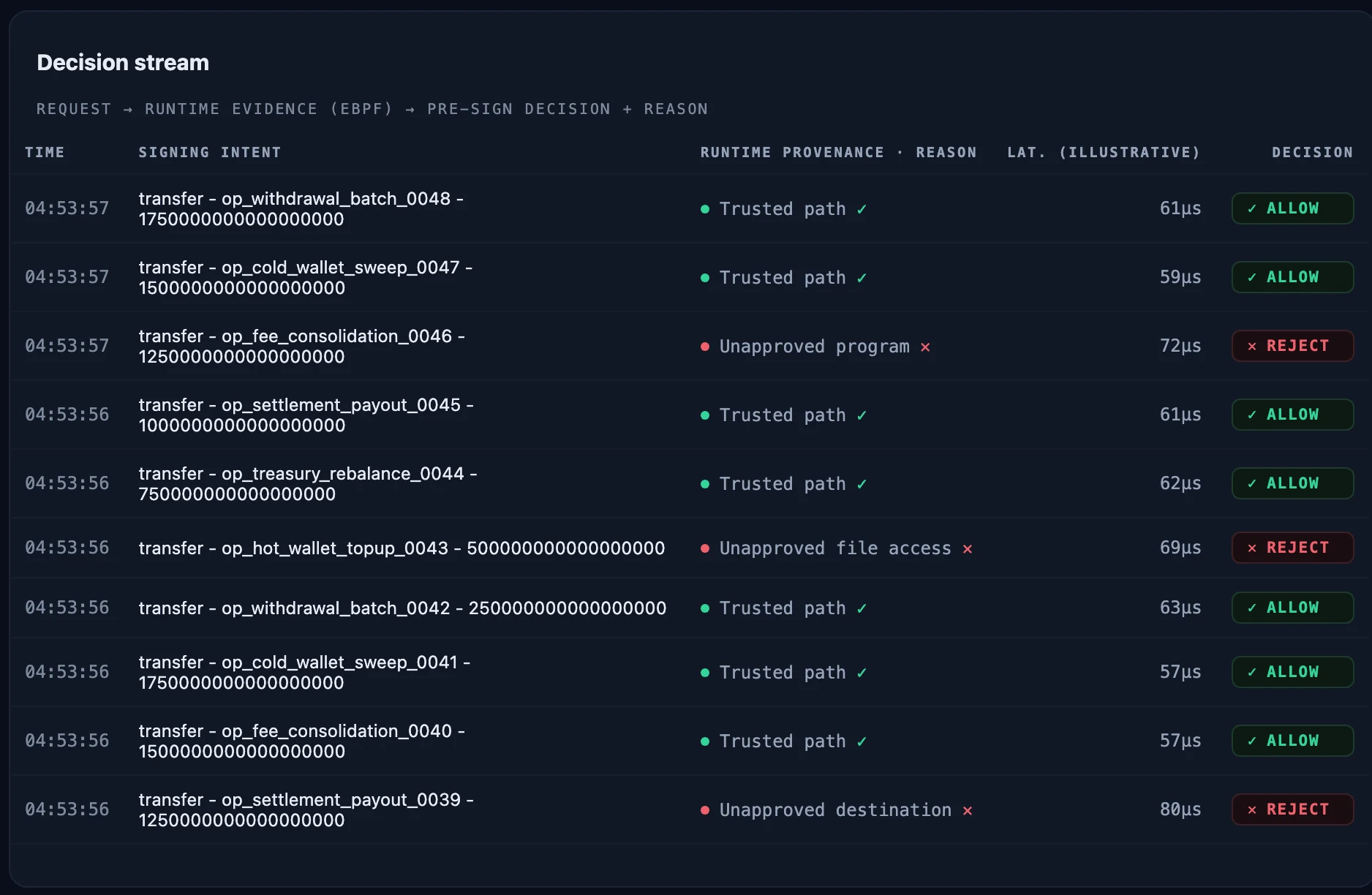
Weighs the signing request, the runtime evidence and the policy together, and issues an approval sealed to that one request.
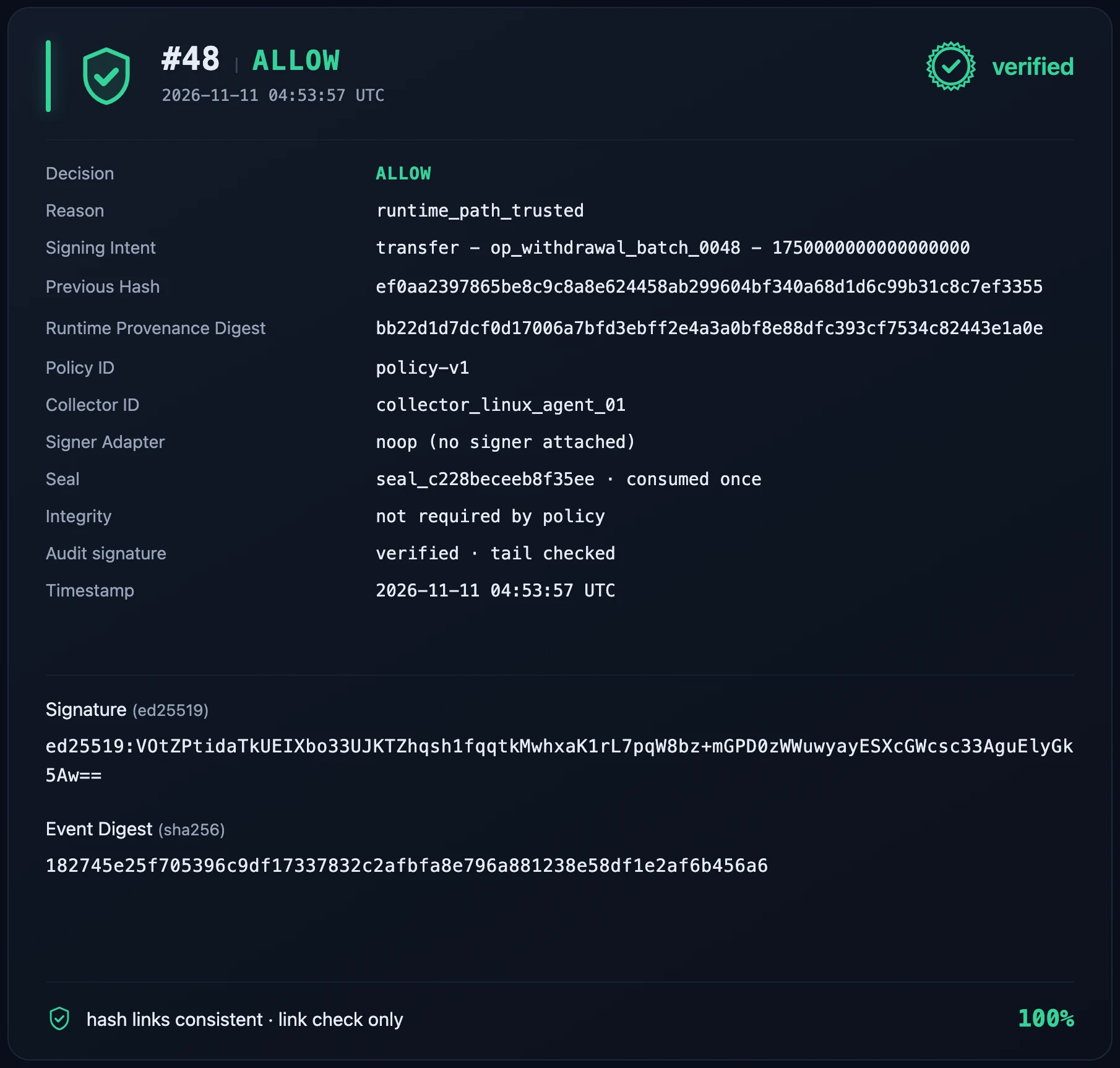
Sits in front of the signer and checks the approval. With no valid approval, or an approval already used, the signer is never called.
gateway · decision → status
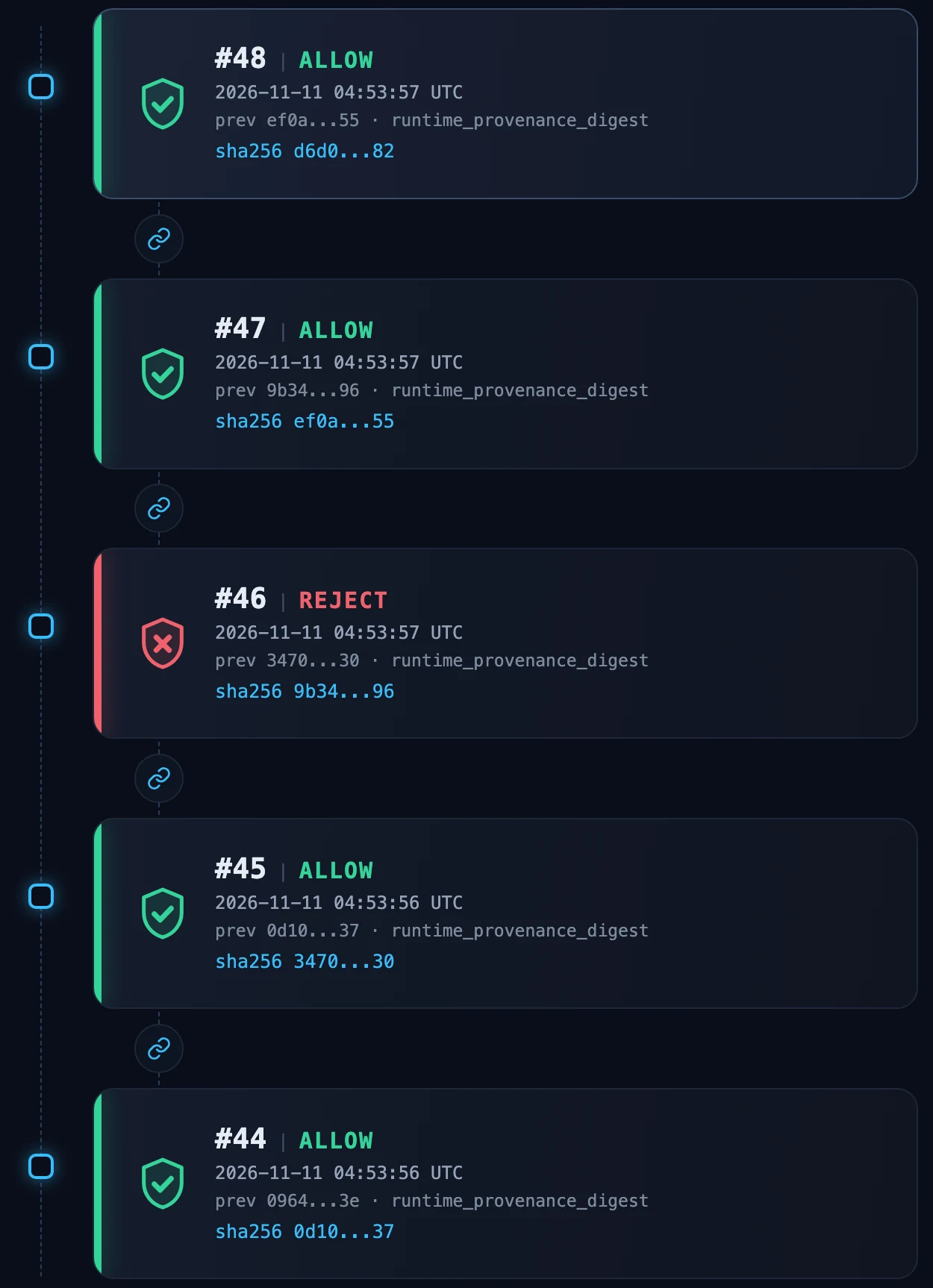
verifiedexecuteddecision_token_replayblocked · approval reusedEvery decision becomes a signed record linked to the previous one by hash. A verifier checks the links and the signatures separately.

REJECT
A request that is not on an allowed execution path is a REJECT. Policy cannot soften this.
core · decision
Ships as one install.sh bundle. The dashboard is installed with it.
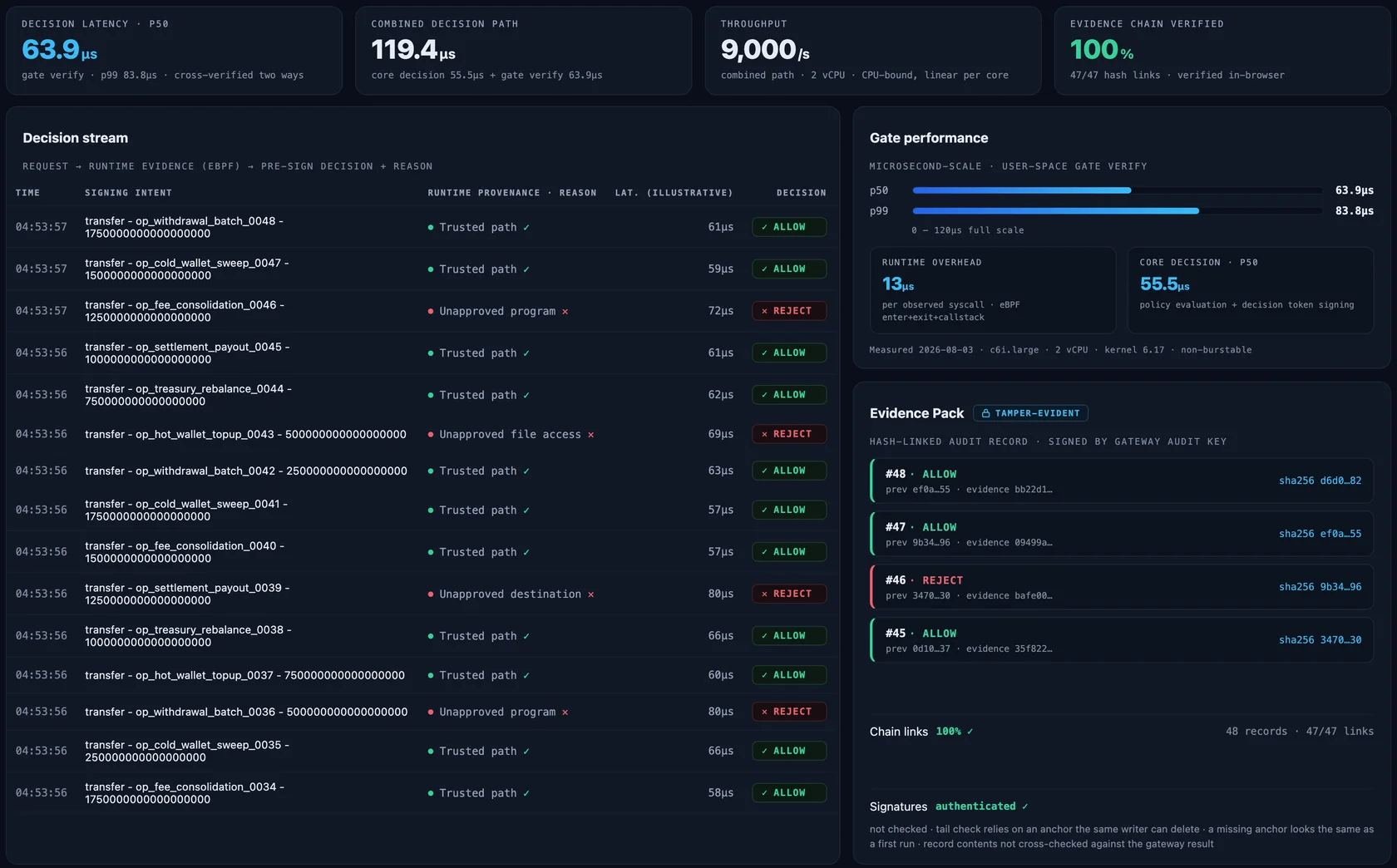
The console snapshot and Evidence Pack are built from a real engine run.
An adapter connects to HSMs through the PKCS#11 standard. Integration with real hardware is validated in a PoC, in your environment.
Nothing gets signed. SignTrail is fail-closed: in enforce mode, if it can’t reach a decision in time, the signature doesn’t go ahead. In observe-only mode the signature proceeds and the outcome is recorded.
Where the request came from. HSM and MPC policies check who signs and what is signed, while SignTrail checks whether the request came from the expected program, what it opened and connected to in the seconds before, and whether signing files still match what was deployed. A request from a tampered process can look valid to the signer, and SignTrail rejects it before it is signed.
No. Each approval is sealed to that request and signer and works only once. Reusing it, or attaching it to another request, is rejected.
Teams that move digital assets or run privileged onchain operations: exchanges, custodians and financial institutions, DeFi protocols, and wallet or infrastructure providers. Most start with one critical signing workflow, such as cold-wallet transfers or treasury moves.
The safest signature is the one that never gets executed when the path is wrong.