
Pre-sign blocking, verified on the real engine
The product film and real engine output show how a request is blocked.
Real engine run

SignTrail checks that a signing request came from a trusted execution path, right before it is signed. If it cannot verify, it does not sign.

Pre-sign blocking for requests outside the allowlist
Requests outside the allowlist are rejected; only how passes are handled is a deployment policy choice.
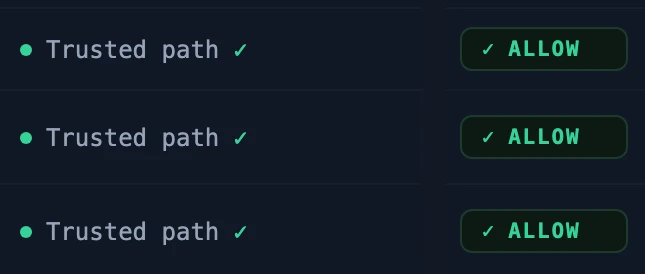
Trusted path
When every event is on the allowlist, the request passes.
runtime_path_trusted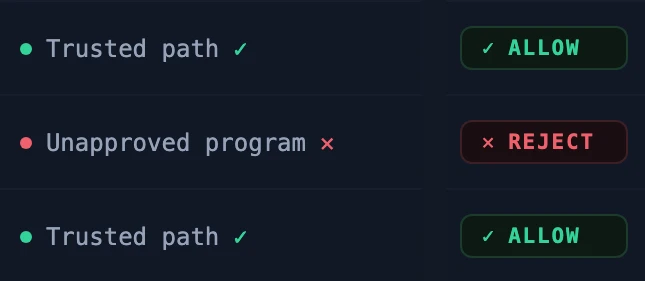
Unapproved program
A program that is not on the list created the request, so it is rejected.
untrusted_request_origin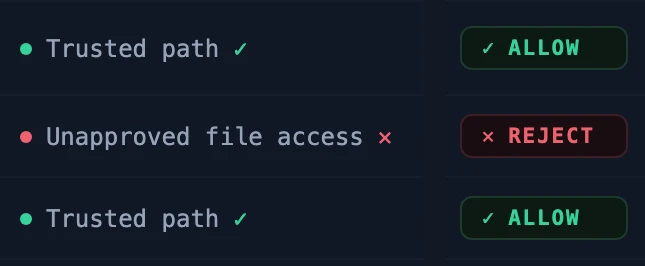
Unapproved file access
The request opened a file outside the list, so it is rejected.
file_access_not_allowed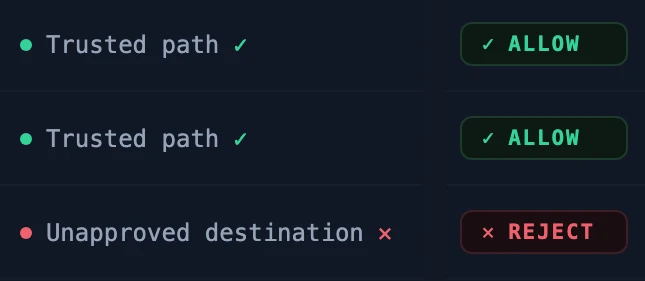
Unapproved destination
The request connected to an address outside the list, so it is rejected.
network_destination_not_allowed- decision
- ALLOW
- status
- BLOCKED
- gateway_reason
- decision_token_replay
Approval reuse
Even when the decision is ALLOW, reusing an approval that was already spent is blocked again by the gateway right before signing.
decision_token_replay
Real engine output. Per row latency is illustrative.
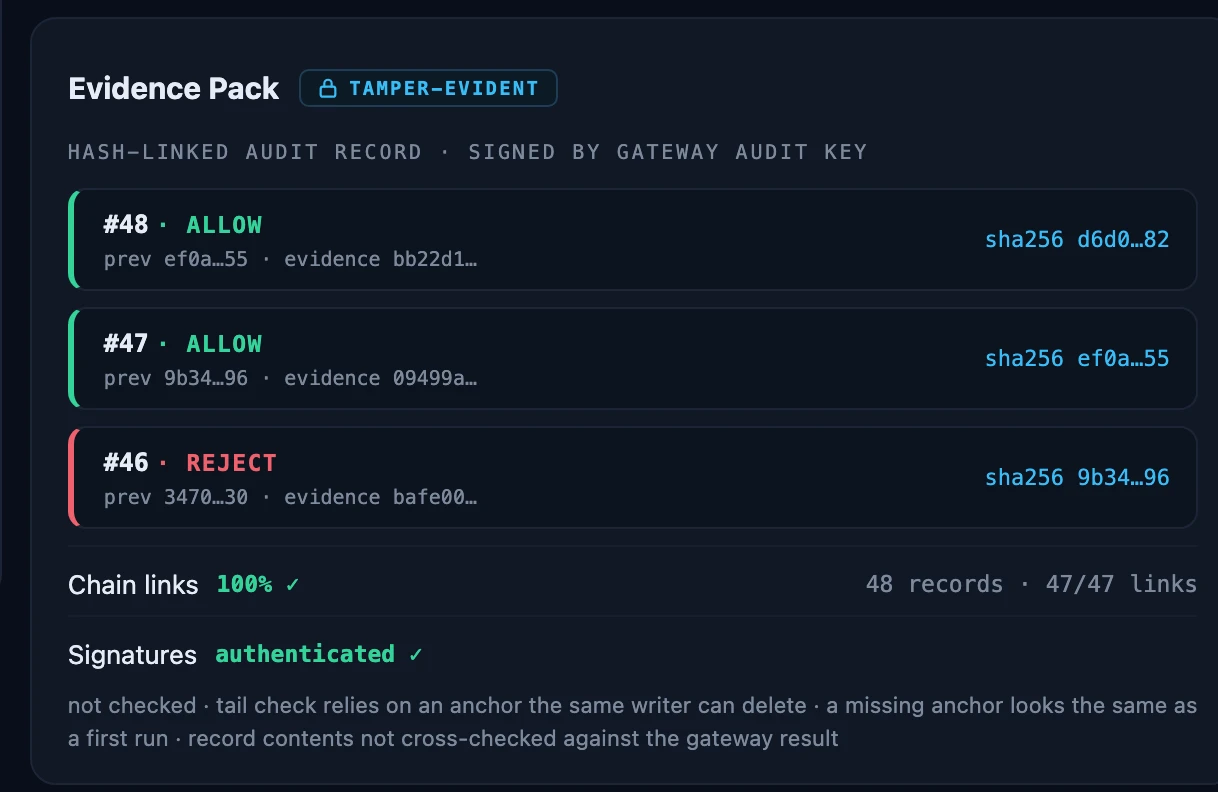
Decision records with the reason for every allow and block
Allowed and blocked requests both leave a signed record, and a verifier checks the links and authenticity.
FAQ
Every decision becomes a signed record linked to the previous one by hash. The verifier reports chain links and signature authenticity separately, and the Evidence Pack shows each decision with its reason and the policy that applied.
You refresh the baseline. When the executable or bundle changes, the list of expected files and the policy are updated, otherwise the new files would be rejected as changed. The update is checked and replayed against past traffic before it goes live.
Anything outside the allowed execution path is blocked with REJECT, and policy cannot soften that. When everything is on the allowlist the request passes, and the default is ALLOW. HOLD and REVIEW are values a deployment policy can choose so that a pass is held or reviewed instead of signed right away. Anything other than ALLOW never reaches the signer.

Stop Hacks Right Before Signing
The safest signature is the one that never gets executed when the path is wrong.